Image
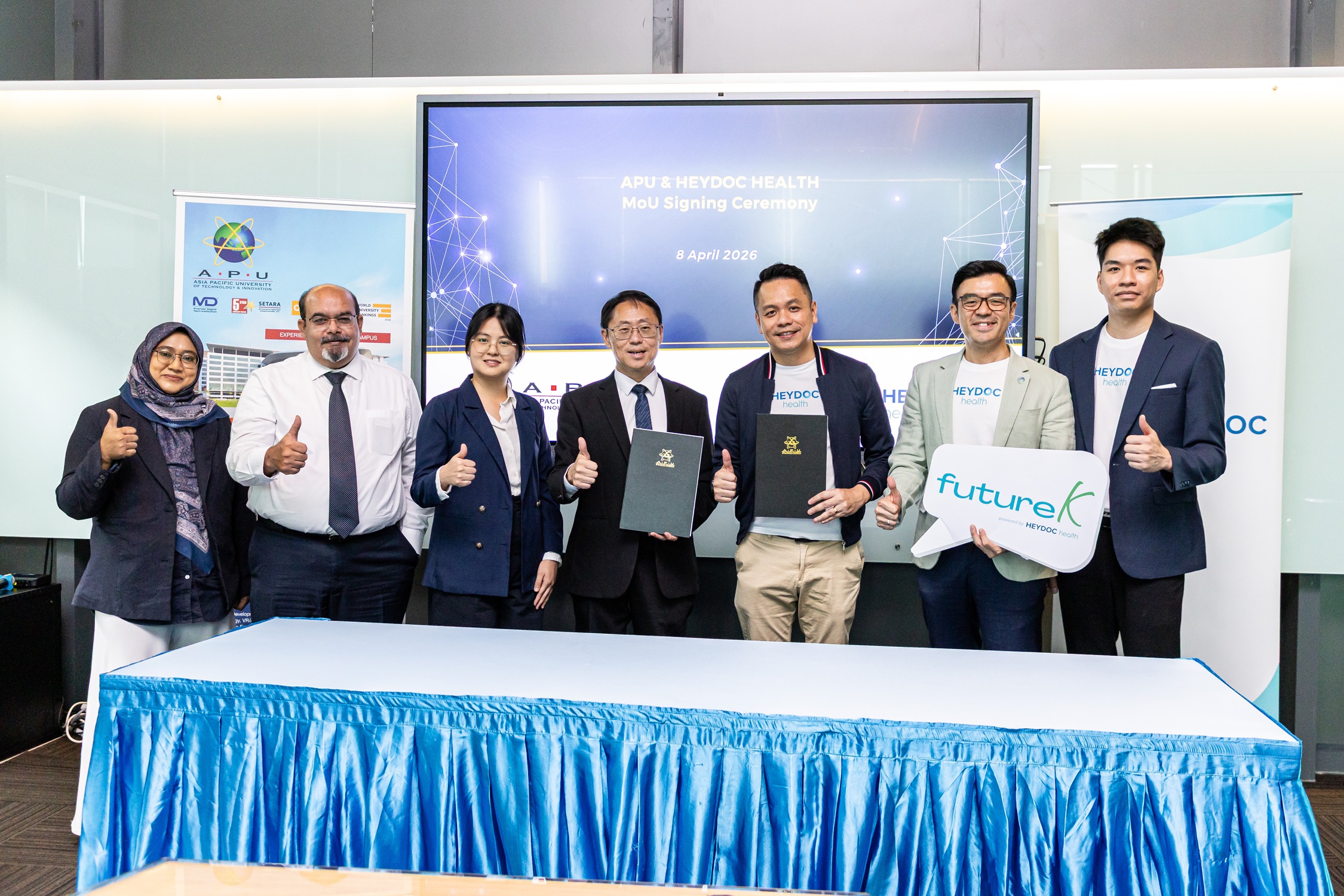
Asia Pacific University of Technology & Innovation (APU) has strengthened its position as a leading digital technology university through a strategic collaboration with Heydoc Health Sdn Bhd, aimed at advancing AI-powered telemedicine and improving healthcare accessibility for rural and underserved communities in Malaysia.
The partnership, formalised through a Memorandum of Understanding (MoU) and a research Memorandum of Agreement (MoA), establishes a robust academic–industry framework to drive research, innovation, and real-world deployment of digital healthcare solutions.
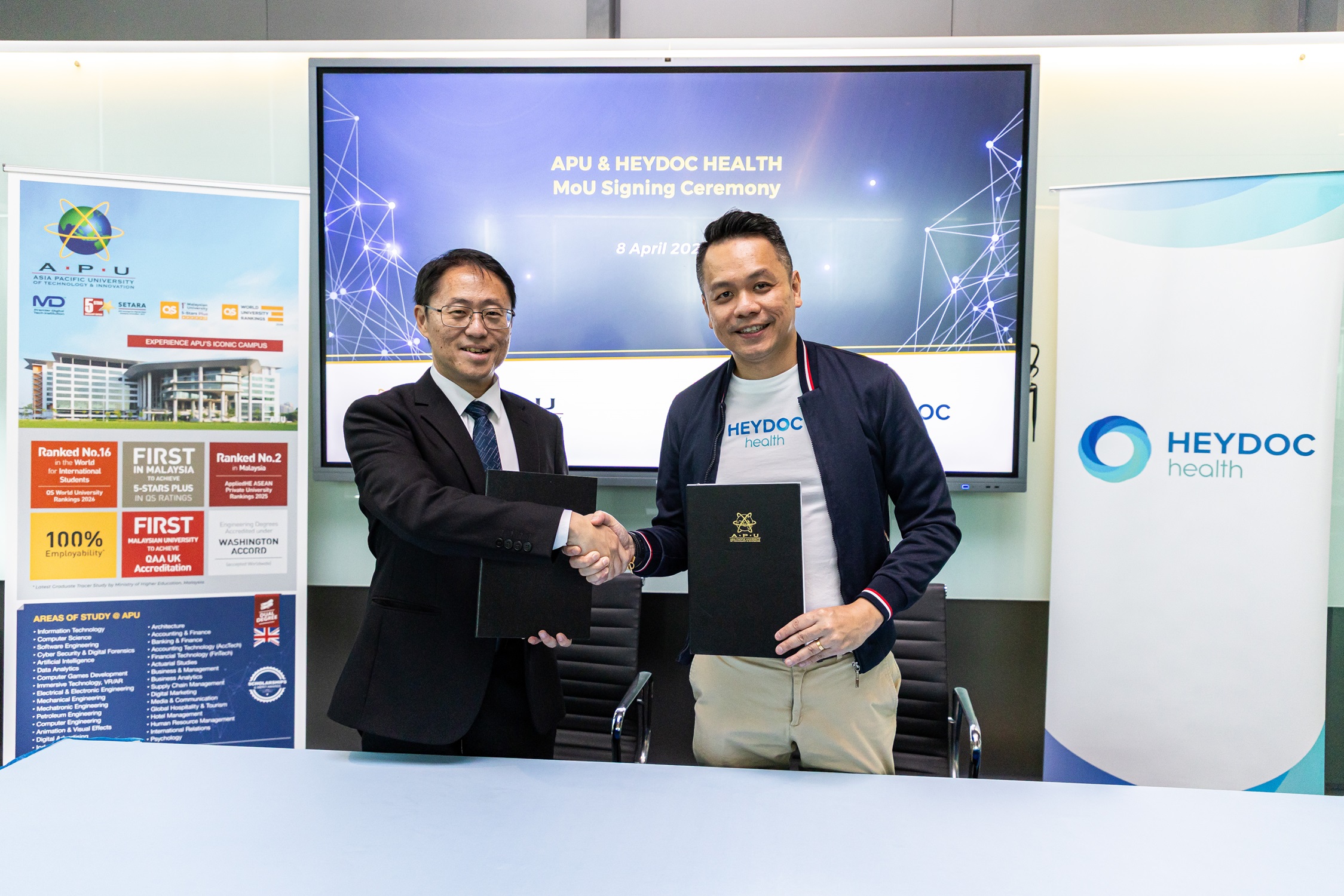
The signing ceremony took place on 8 April 2026 at APU’s purpose-built campus in Technology Park Malaysia, Bukit Jalil, Kuala Lumpur. The documents were signed by Professor Dr Ho Chin Kuan, Vice Chancellor of APU, and Dr Raymond Choy, Founder and Chief Executive Officer of Heydoc Health.
At the core of this collaboration is APU’s strong academic and technological foundation, which integrates artificial intelligence, data analytics, and digital innovation into its multidisciplinary programmes. By combining these capabilities with Heydoc Health’s operational telemedicine platform, the partnership seeks to explore how advanced technologies can transform healthcare delivery and address long-standing accessibility challenges.
This initiative adopts a highly integrated, hands-on model that brings academic researchers and industry practitioners together across the entire innovation lifecycle—from research design to field deployment and policy engagement. APU’s faculty experts in supply chain management and health economics will work directly within Heydoc Health’s operational environment, while industry practitioners contribute to APU’s research and teaching ecosystem.
Prof Ho emphasised the importance of this collaborative approach, stating, “At APU, we believe meaningful innovation happens when academic research meets real-world challenges. This partnership enables our researchers and students to work closely with industry to develop digital healthcare solutions that improve accessibility, equity, and efficiency—particularly for underserved communities.”
The research initiative will focus on the real-world implementation of Heydoc Health’s digital platform, which integrates AI-powered triage, teleconsultation with licensed medical practitioners, electronic prescriptions, and pharmacy fulfilment through a nationwide network. Pilot deployments in selected rural areas will evaluate how such technologies can enhance consultation efficiency, reduce barriers to care, and support more sustainable outpatient healthcare models.
APU’s academic strength is further reflected in its interdisciplinary research approach. The study will be co-led by experts from the School of Business (SoB), including Associate Professor Dr Hajah Rohana Sham, a specialist in supply chain resilience and logistics optimisation, and Dr Lourdes Loh Ye Shing, a health economics expert leading the economic evaluation component. Their work will assess cost-effectiveness, affordability benchmarks, and the long-term economic impact of AI-integrated telemedicine solutions.
Professor Dr Kashif Hussain, Senior Head of the School of Business at APU, highlighted the broader significance of the research, noting that the collaboration will generate insights directly relevant to Malaysia’s digital health transformation agenda through the evaluation of user acceptance, clinical workflow integration, supply chain responsiveness, and economic viability.
Beyond research, the partnership reinforces APU’s commitment to experiential learning and industry engagement. Students will have opportunities to participate in real-world projects, contributing to data analysis, system evaluation, and innovation development. This ensures that graduates are equipped not only with technical knowledge but also with practical experience in applying advanced technologies to solve complex societal challenges.
Dr Raymond Choy noted that the collaboration reflects the growing need for innovation grounded in real-world impact. “Digital health has the potential to transform care delivery, but it must be supported by strong evidence and practical implementation. Through this partnership with APU, we aim to demonstrate how AI-enabled telemedicine can improve healthcare accessibility, particularly for communities that face challenges in reaching care,” he said.
The project will bring together interdisciplinary teams comprising academics, clinicians, supply chain specialists, and public health experts. Outcomes are expected to include peer-reviewed publications, policy recommendations, and scalable digital healthcare solutions that support Malaysia’s evolving healthcare ecosystem.
As digital transformation continues to reshape the healthcare sector, this collaboration underscores APU’s ability to harness advanced technology, academic expertise, and industry partnerships to drive meaningful innovation—positioning the University at the forefront of shaping a more inclusive and technology-enabled future for healthcare.
News & Happening
Download e-Brochures
Intake Calendar
Want to know more ?
Let’s Connect